Protect the VIP: Rethinking Counter-Strike’s Assassination Mode
Hello everybody—if you’re reading this, I hope you’re doing well. Today I want to talk about a game mode in Counter-Strike that doesn’t come up much anymore, even among long-time players of CS 1.6: Assassination Mode, marked by the prefix as_.
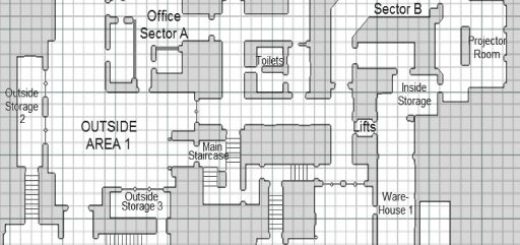
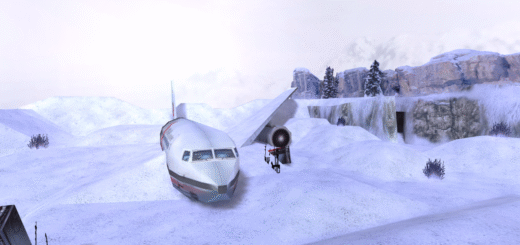
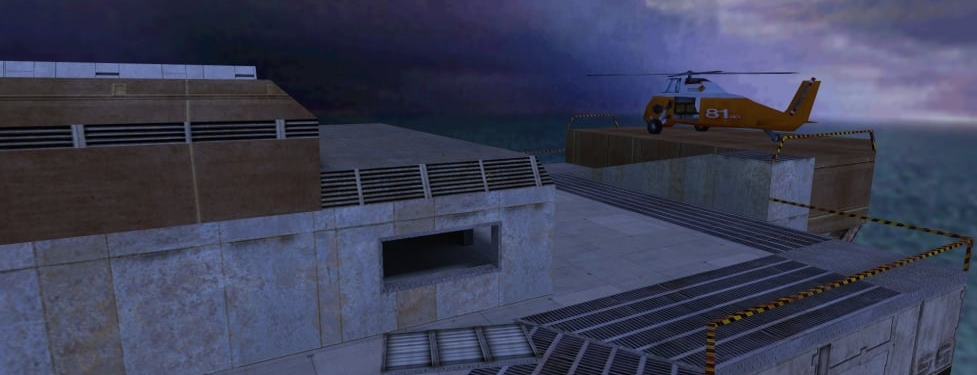
If you’ve been around since the early days, you’ll remember Oilrig (as_oilrig)—the one official assassination map that shipped with the retail version. But if you played during the Beta era, you might recall a few others: as_forest, as_highrise, as_riverside, and as_tundra. For reasons Valve never really explained, Oilrig was the only one promoted to release. The rest faded into obscurity. Were those maps flawless? Hardly. Even Oilrig had its share of balance issues. But taken together, they showed a kind of variety and ambition that deserved more than being left on the cutting-room floor.
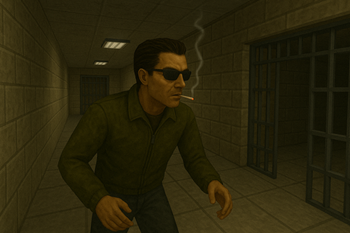
So what exactly was Assassination Mode? At its heart, it was built around one role: the VIP. One player on the CT side was chosen at random to take this role. The VIP couldn’t buy weapons or gear, but spawned with a USP and double armor—200 armor points in total. The mission was simple: Counter-Terrorists had to escort the VIP to a designated extraction point, often marked by an APC or helicopter. Terrorists had one job: kill the VIP before he escaped.
The win conditions were asymmetrical, but easy to understand. CTs won if the VIP made it to safety, or if they eliminated every Terrorist. Ts won if the VIP died—or if the clock simply ran out.
What made the mode stand out is how it shifted the rhythm of Counter-Strike. Instead of two equal sides rushing to secure the same objectives, you suddenly had a single vulnerable figure whose survival dictated everything. CTs had to plan routes, think about cover, and stick together. Terrorists had to ambush, trap, and disrupt. Every round became a moving escort mission, more like a scene from a film than a mirrored firefight.
The problem was that Assassination never got the polish it needed. Too often, Ts could just camp obvious routes, and too often the round came down to whether the VIP knew what they were doing. The original developers and Valve eventually gave up on the mode, shifting focus almost entirely to Defuse and Hostage maps. (Hostage, ironically, being the namesake prefix cs_—a mode Valve themselves rarely revisited with meaningful updates.)
But let’s imagine, for a moment, what Assassination could look like today in CS2. The first and most obvious fix: maps need more than one extraction point. In real life, maybe you’d only have a single route out. But this is a video game, and a single exit means Terrorists only need to camp one spot. Give them multiple possible exits—rooftops, courtyards, vehicles—and suddenly the match becomes about choices, bluffing, and adaptation.
Mobility should be at the center of map design. CTs should be able to fake an escort, run decoys, or split their squad to draw fire and create openings. Terrorists should be forced to scout, gamble, and over-rotate. Active environments would help: elevators, breakable walls, flickering lights, security cameras, vents. Oilrig had a taste of this back in 1.6, but modern scripting and physics could push it much further, making each round feel less predictable and more alive.
The VIP himself should remain unique. Historically, the VIP spawned with only a pistol and heavy armor. That identity should stay, but with some refinement. Instead of locking them into a weak pistol forever, give them a distinct sidearm or one-off gadget. Maybe a high-damage revolver that reloads painfully slow. Or a small, near-silent pocket pistol with barely enough ammo to matter. Just enough to feel cinematic without turning the VIP into an action hero. At the end of the day, the point is clear: the VIP is one man, and he needs his team to survive.
Weapon restrictions should also return. Back in the beta days, certain guns were banned outright on assassination maps, and it made sense. A modern version should follow the same principle: don’t let easy, long-range firepower dominate. Keep the escort meaningful by limiting AWPs, LMGs, and a few of the “spammy” SMGs. Which weapons to restrict? That would have to be playtested. But the philosophy is simple—balance the map so that tactics, teamwork, and positioning matter more than raw firepower.
In short, Assassination Mode was never perfect, but it pointed toward something Counter-Strike rarely explored: asymmetry, tension, and cinematic pacing. If CS2 ever brought it back, with smarter map design and modern mechanics, it could be more than a historical curiosity. It could be the fresh, nerve-wracking mode that Counter-Strike never fully allowed itself to become.
Written by Slade Krowley. And remember, my friends—the dawn is your enemy.